

FIT has joined a major city-backed initiative to push forward sustainable materials research. Gotham Foundry, a hub focused on developing renewable materials in the fashion, construction, food, and health sectors, launched Sept. 22 in Harlem with $45 million in backing from the New York City Economic Development Corporation.
FIT joins Columbia University, the Advanced Science Research Center at the CUNY Graduate Center (ASRC), and the community lab Genspace as Gotham Foundry’s operators.
“Gotham Foundry aims to become a catalyst for the sustainable materials revolution; a destination for bright minds and next-generation companies, where next-gen textiles, construction materials, and health care can be reimagined,” said lab co-director Theanne Schiros, professor of Science.
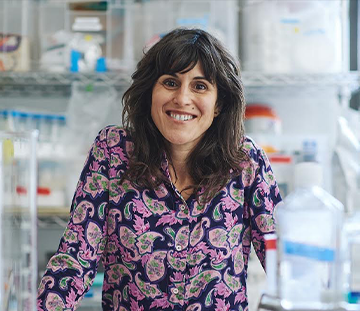
Over the 11 years Schiros has taught at FIT, she (together with Gotham Foundry director Helen H. Lu, a professor at Columbia Engineering) worked on several nature-based materials, including a kelp-based bioyarn, now produced by Keel Labs; “leather” grown from biocellulose; and performance fabric grown from bacteria, which forms the basis of the company Werewool. That experience also gave her insight into the challenges that force many startups to leave New York once they reach a certain size, including a lack of mid-scale manufacturing infrastructure and not enough trained workers.
Gotham Foundry is meant to address both issues, while focusing on areas that are not only major pillars of New York’s economy but also some of the most polluting and carbon-intensive industries, Schiros said.
For instance, cement and concrete production creates 9% of global carbon emissions, more than any country except China and the U.S.
Gotham Foundry’s mission, Schiros said, is to support a broad and inclusive user community for material innovation and provide open access to state-of-the-art resources, pathways to commercialization, and training for the green jobs of the future. The kickoff event featured innovators showcasing low-carbon cement, as well as food packaging and textiles made from microbial fermentation of food waste and corn.
“Nature uses a handful of building blocks and makes all sorts of things—bones, tissue, tendons, trees, cement, limestone. In that spirit, we see both alternative leathers and high-density construction materials grown from mycelium; you can reprogram microbes to design fabric,” she said. “The possibilities for materials that outperform conventional materials, and have a sustainable or bioregenerative nature, are great.”