
FIT Future//Forward, the strategic initiative led by President Jason Schupbach, aims to broaden access to career-focused education, strengthen industry partnerships, and lift the creative economy in New York City and State. As a major driver of that work, FIT is inviting industry luminaries and rising stars to share their hard-earned insights with students in a series of talks called FIT Future//Forward Conversations.
“You cannot solve the world’s problems without creative people,” Schupbach said. “They must be at the table to offer creative solutions.”
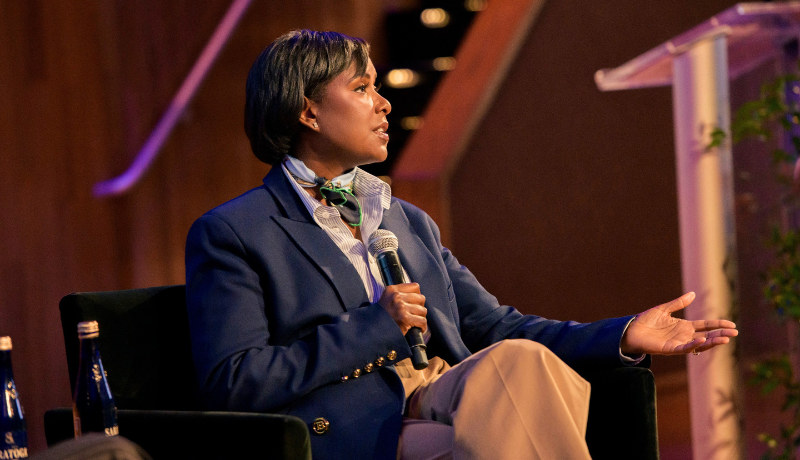
For the Presidential Speaker Series’ first conversation, Schupbach sat down with fashion executive Felita Harris, author of The Designer’s Path and co-founder and executive director of the nonprofit RAISEfashion, which supports independent designers from historically excluded communities. Harris talked about her journey from the retail sales floor to the top of the corporate fashion world to giving back through RAISEfashion.


During the pandemic, Harris, formerly executive vice president of sales at Alexander Wang, joined a Zoom call with seven other women to come up with a plan for helping underrepresented designers grow their businesses. The shift from working for established brands to working with designers excited her, and she threw all of herself into it. According to her, RAISEfashion has grown into a network of over 400 advisors supporting over 100 designers, with a sought-after eight-week masterclass. The five-year survival rate for participating businesses is an impressive 95%.
“If you want to make it in fashion,” she said, “you must accept that it is capital-intensive, requires deep business literacy, and demands a strong network. There are no shortcuts. You can’t know everything on day one, but you can align yourself with industry experts who are willing to share their network and knowledge with you.”
Schupbach asked her how FIT can help students get access to these networks, and she emphasized the importance of peer-to-peer networking, as well as taking full advantage of internships, “the primary pathway to full-time employment.” Harris also recommended that aspiring designers think beyond the next year or two and create a 10-year plan, then “reverse engineer your steps to get there.”
Before opening up to audience questions, Schupbach asked, “If you could wave a magic wand and fix one problem in fashion right now, what would it be?”
Harris was unequivocal in her response. “Access to people, access to capital, and access to opportunity. The industry historically gatekeeps access. At RAISEfashion, we build community by asking established leaders: ‘Will you open your network to someone who doesn’t have these opportunities?’ When leaders say yes, it changes everything.”