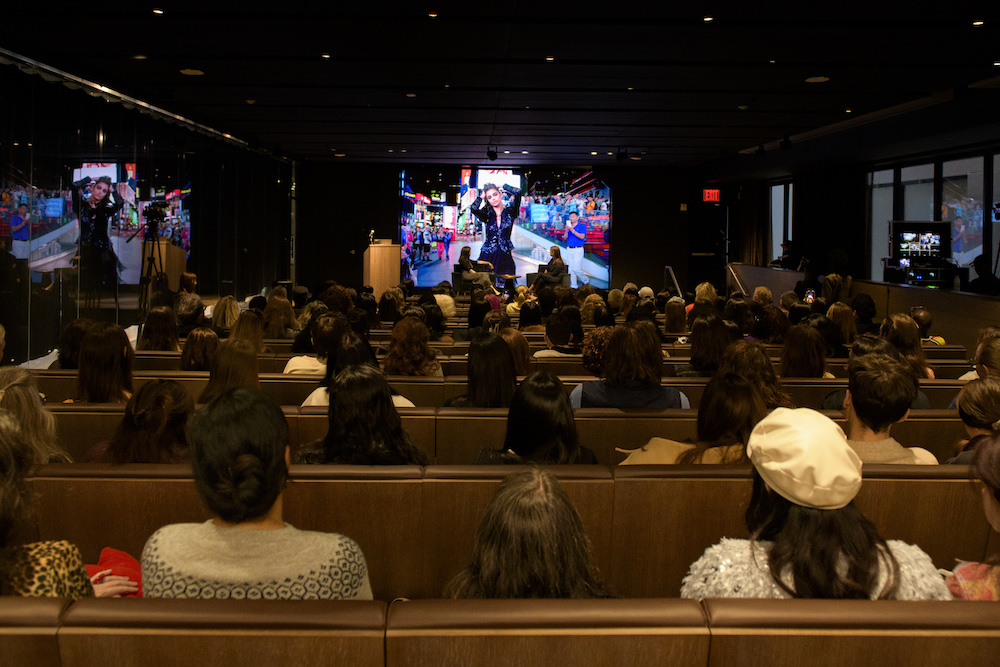
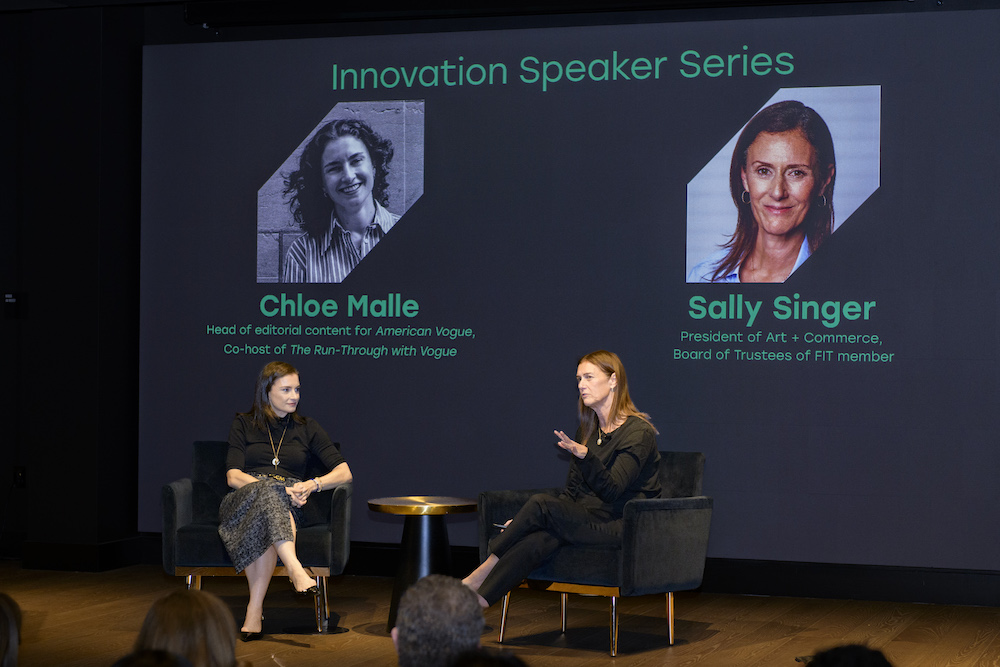
For one of her first Vogue covers, Chloe Malle, head of editorial content at the magazine, featured Bad Bunny in Valentino, wearing Willy Chavarria boots. “I like it when fashion is reflecting the culture, but also is in conversation with it,” Malle told an FIT audience on October 19. At the event, the first of the Future//Forward Innovation Speaker Series, president of Art + Commerce talent agency and FIT Trustee Sally Singer engaged Malle in a conversation about fashion, new media, and the editor’s life.
The pair began by discussing highlights of fashion shows they’d recently attended in Paris and New York. Malle cited “the past three Chanel shows. [Designer] Matthieu Blazy has been like a kid in a candy box.” Singer, who has been an editor at Vogue and T: The New York Times Style Magazine, agreed that new Dries Van Noten creative director Julian Klausner’s collection was good—“so Dries-y.” Up-and-coming designer Zane Li, Fashion Design BFA ’23, Malle said, is “a great example of a New York talent that there is a universal passion for.” (On October 20, Li won the $300,000 CFDA/Vogue Fashion Fund Award.)
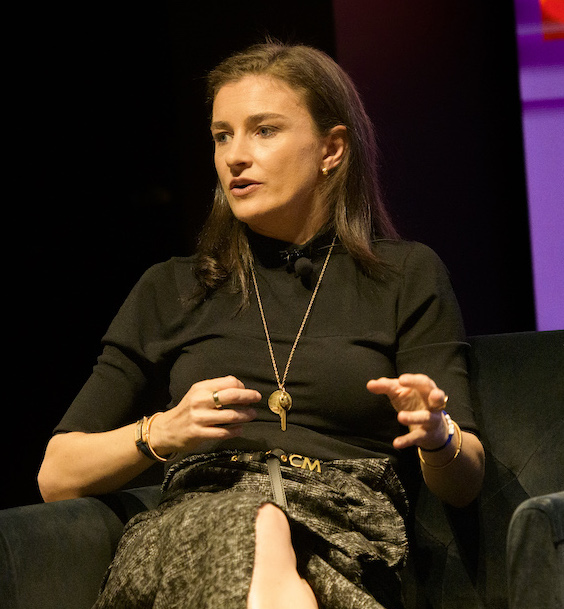
Singer asked about the greatest joys of Malle’s job. Malle said she was surprised by how “fruitful and rewarding” it was to make The Run-Through, Vogue’s podcast. She mentioned judging the cover contest for Dogue, the magazine’s tribute to dogs. The winner? An Italian greyhound named Sir Spud. But perhaps her favorite activity is the decision-making meetings with her staff. At a recent discussion of Vogue’s seasonal gift guide, Malle had to clarify her preference for gifts that were “whimsical” (good—a Panettone-shaped candle) versus “twee” (less good—a luxury backgammon set).
Malle, Singer noted, makes herself more open and accessible to her audience than previous Vogue editors Diana Vreeland and Anna Wintour. Malle said the difference stemmed from her extroverted personality. “People have said to me, ‘Vogue should be aspirational, not accessible,’ but I don’t agree with that,” she said. As an example of a story that bridged the divide, she described a forthcoming feature centered on bird-watching—a newly popular pastime that anyone can practice. (“Bird-watching is the new pottery,” Singer agreed.) The models sport wearable bird-watching garments, though they were designed by Louis Vuitton.
For students who are aspiring fashion editors, Malle and Singer said storytelling opportunities abound today, and mentioned Substack as a potential entry point. One student asked how to improve the online version of FIT’s student magazine Blush. Singer, who edited Vogue online, said to make the internet version do everything print can’t: “Make it talk, make it move, make people dance, turn the clothes around, flip things upside down.” Malle asked who FIT students would like to see on a Vogue cover. One mentioned Barbara Palvin, the model who walked for Victoria’s Secret six weeks after giving birth. Another suggested plus-sized artist and activist Michaela Stark, “to challenge fatphobia.” (The comment drew applause.)
Upcoming talks in the FIT Future//Forward Conversations series feature world-renowned stylist Law Roach; designer Willy Chavarria interviewed by The New York Times’ Vanessa Friedman; and Givaudan fragrance exec Matthieu Befve.