
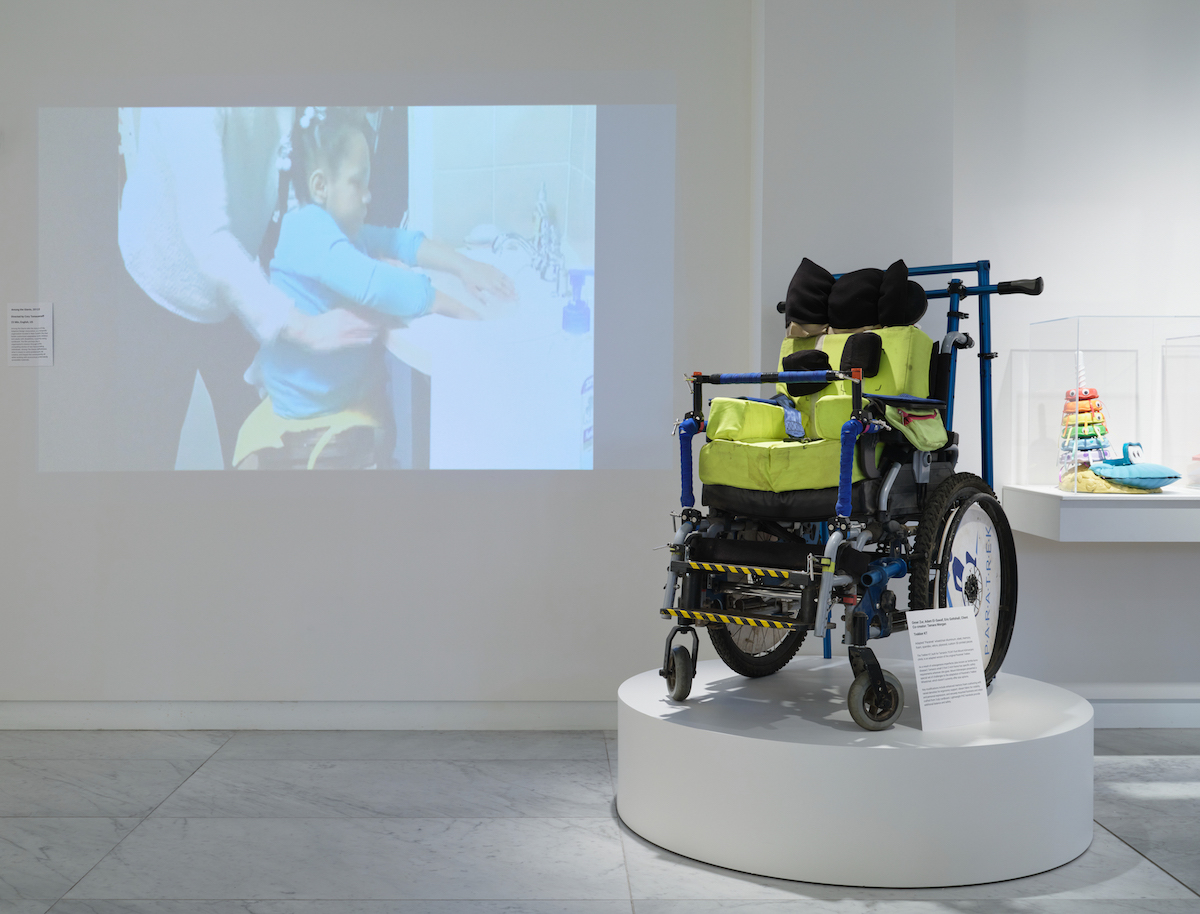
The FIT Art and Design Gallery recently opened Adapt/Evolve, a multidisciplinary exhibition exploring adaptive and inclusive design across fashion, interior, graphic, jewelry, footwear, accessories, and toy design. On display through October 26, the exhibition highlights how design can expand access, promote autonomy, and create joy. Admission is free, and the gallery is open daily from 9 am to 5 pm.
At the lively opening reception on September 18, Troy Richards, dean of the School of Art and Design, began the proceedings with deeply personal remarks underscoring the importance of adaptive design. “My mother, who passed away in 2017, lived with ALS,” he shared. “The disease gradually took away her mobility and her independence. Watching her navigate the world as it became less accessible made me deeply aware of how much design matters in everyday lives.”
Curator Fawz Kabra followed with acknowledgments to the many partners, alumni, and artists who contributed to the exhibition, which features more than 60 works by FIT students, faculty, and alumni, alongside invited artists and organizations such as the Adaptive Design Association (ADA), furniture company OFS, and the High School of Fashion Industries.
The gallery itself immerses visitors in a wide-ranging display. One section features adaptive furniture—lounge chairs and seating designed for accessibility—while mannequins model both plus-size fashion and adaptive garments designed for wearers with prosthetic limbs. The back gallery presents additional adaptive furniture, with six chairs anchoring the room and the Magnadapt handheld system along the wall. Developed by ADA for a man with a spinal cord injury, the system uses magnets to switch between household tools, from utensils to screwdrivers.
Other works emphasize the beauty and craftsmanship of adaptive design. Two canes designed by Wendy Yothers, former assistant professor of Jewelry Design, are both functional and visually striking, demonstrating how aesthetic detail can elevate the user experience and promote dignity.
The exhibition also extends beyond the gallery. Insights from an earlier roundtable on adaptive design are featured in a 20-page booklet available to visitors. “What I hope visitors take away from seeing our work is that adaptive fashion isn’t just functional, it’s emotional,” said FIT faculty member Grace Mohammadian. “Clothing impacts how we show up in the world, and everyone deserves to feel seen, supported, and included. Adaptive design isn’t a specialization—it’s essential.”
A symposium accompanying the exhibition will be held on October 16 from 1 to 6 pm, featuring panel discussions and presentations investigating the possibilities and impact of adaptive design.
Adapt/Evolve invites audiences to rethink accessibility not as an afterthought, but as a driver of cultural expression and social change. With its range of works and perspectives, the exhibition is both a celebration of innovation and a call to action for more inclusive futures.